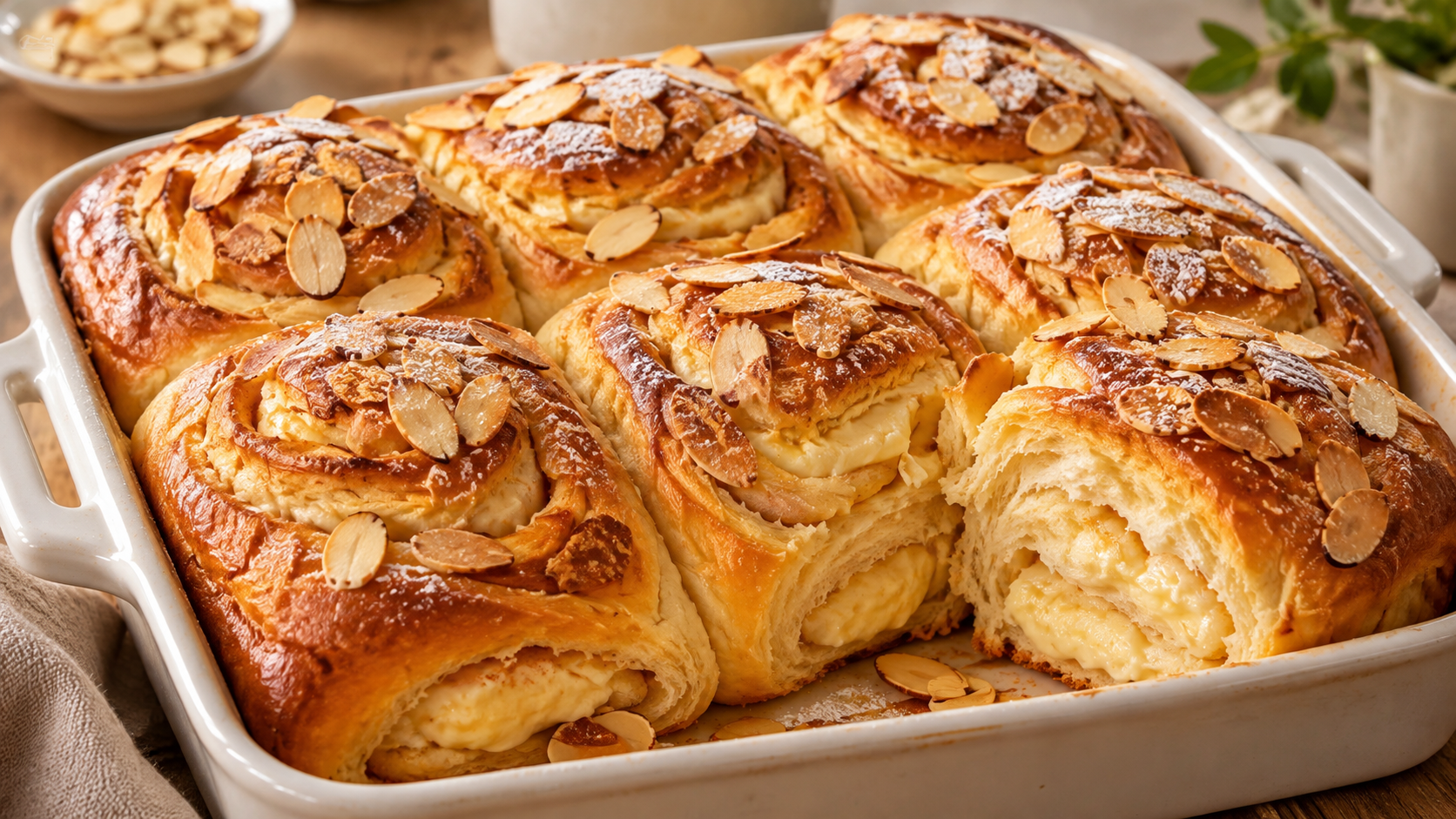
These homemade Almond Cream Rolls are soft, fluffy, buttery pastries filled with a rich almond cream filling and finished with crunchy sliced almonds and a light dusting of powdered sugar. Each roll has a tender interior, a lightly golden exterior, and a delicious nutty sweetness that makes it perfect for breakfast, afternoon coffee, or a homemade bakery-style dessert.
The dough is made with simple baking ingredients and enriched with milk, egg, and butter for a soft texture. The almond filling combines butter, sugar, ground almonds, egg, and almond extract to create a smooth, flavorful filling that becomes beautifully fragrant as it bakes.
This recipe makes 6 generously sized almond cream rolls and is suitable for home bakers.
Recipe Details
- Preparation Time: 30 minutes
- First Rise: 1–1½ hours
- Second Rise: 30–40 minutes
- Baking Time: 20–25 minutes
- Total Time: Approximately 2 hours 45 minutes
- Servings: 6 rolls
- Oven Temperature: 350°F (175°C)
- Difficulty: Moderate
Ingredients
For the Dough
- 375g (3 cups) all-purpose flour
- 180ml (¾ cup) warm whole milk
- 7g (2¼ teaspoons) instant yeast
- 50g (¼ cup) granulated sugar
- 1 large egg (approximately 50g without shell)
- 57g (¼ cup) unsalted butter, softened
- 3g (½ teaspoon) salt
For the Almond Cream Filling
- 113g (½ cup) unsalted butter, softened
- 100g (½ cup) granulated sugar
- 100g (1 cup) finely ground almonds
- 1 large egg (approximately 50g without shell)
- 2.5ml (½ teaspoon) almond extract
For the Topping
- 25g (¼ cup) sliced almonds
- 1 large egg
- 15ml (1 tablespoon) milk
- 10–15g powdered sugar for dusting
Equipment Needed
- Large mixing bowl
- Small mixing bowl
- Measuring scale or measuring cups
- Whisk or electric hand mixer
- Rolling pin
- Baking dish approximately 9 × 9 inches
- Parchment paper
- Pastry brush
- Sharp knife or dough scraper
- Clean kitchen towel or plastic wrap
Step-by-Step Instructions
Step 1: Prepare the Dough
Pour the warm milk into a small bowl and add the instant yeast and granulated sugar. Stir briefly to distribute the ingredients.
In a large mixing bowl, combine the all-purpose flour and salt. Add the yeast mixture and one large egg. Mix until the ingredients begin to form a rough dough.
Add the softened butter and continue mixing until incorporated.
Transfer the dough to a lightly floured work surface and knead for approximately 8–10 minutes, or until it becomes smooth, elastic, and slightly soft.
The dough should feel soft and slightly tacky but should not stick excessively to your hands. Avoid adding too much extra flour, as this can make the finished rolls dense.
Step 2: Allow the Dough to Rise
Lightly grease a clean mixing bowl with a little oil or butter.
Place the kneaded dough inside and turn it once so the surface is lightly coated. Cover the bowl with plastic wrap or a clean kitchen towel.
Leave it in a warm, draft-free place for approximately 1–1½ hours, or until the dough has doubled in size.
The rising time may vary depending on the temperature of your kitchen.
Step 3: Prepare the Almond Cream Filling
While the dough is rising, prepare the almond cream.
Place the softened butter and granulated sugar in a medium mixing bowl. Beat them together until the mixture becomes smooth and creamy.
Add the ground almonds and mix until evenly combined.
Add one large egg and the almond extract. Continue mixing until you have a thick, smooth almond cream.
Scrape down the sides of the bowl to ensure all the ingredients are incorporated.
The filling should be soft and spreadable rather than runny. Keep it at room temperature while preparing the dough.
Step 4: Roll Out the Dough
Once the dough has doubled in size, gently press it down to release the excess air.
Transfer it to a lightly floured work surface.
Using a rolling pin, roll the dough into a rectangle approximately 12 × 16 inches (30 × 40cm) and about ¼ inch (6mm) thick.
Try to keep the thickness consistent throughout the rectangle so the rolls bake evenly.
Step 5: Spread the Almond Cream
Spread the prepared almond cream evenly over the entire surface of the dough, leaving approximately ½ inch (1.25cm) uncovered along one long edge.
Use an offset spatula or the back of a spoon to distribute the filling without tearing the dough.
Make sure the filling is spread in an even layer so every roll receives a similar amount of almond cream.
Step 6: Shape the Rolls
Starting from the opposite long edge, carefully roll the dough into a tight log.
Keep the roll even without squeezing too firmly, as excessive pressure can push the filling out.
Once rolled, gently pinch the seam to seal it.
Using a sharp knife or dough scraper, cut the log into 6 equal-sized rolls.
Each roll should have a visible spiral of almond cream inside.
Step 7: Arrange and Proof the Rolls
Line a 9 × 9-inch baking dish with parchment paper or lightly grease it with butter.
Arrange the 6 rolls in the prepared dish, leaving a little space between them to allow for expansion.
Cover the dish loosely with plastic wrap or a clean kitchen towel.
Allow the rolls to rise for another 30–40 minutes, or until they become visibly puffed and soft.
Avoid allowing them to overproof, as this can affect their structure during baking.
Step 8: Prepare the Egg Wash
In a small bowl, whisk together one large egg and one tablespoon of milk until smooth.
Once the rolls have finished their second rise, gently brush the exposed dough surfaces with the egg wash.
Sprinkle the sliced almonds evenly over the tops of the rolls.
The egg wash helps create a beautiful golden-brown finish, while the sliced almonds add a delicate crunch.
Step 9: Bake the Almond Cream Rolls
Preheat your oven to 350°F (175°C).
Place the baking dish on the middle rack of the preheated oven.
Bake for approximately 20–25 minutes, or until the rolls are puffed and their tops have developed an even golden-brown color.
The almond cream should be set, and the dough should be fully baked in the center.
If the tops begin browning too quickly, loosely cover the dish with aluminum foil for the remaining baking time.
Remove the dish from the oven and allow the rolls to cool for approximately 10–15 minutes.
Step 10: Finish and Serve
Once the rolls have cooled slightly, lightly dust their tops with powdered sugar.
Serve them warm or at room temperature.
The finished rolls should have a soft, fluffy interior, a rich almond filling, golden edges, and a delicate crunch from the toasted sliced almonds.
Tips for Making Perfect Almond Cream Rolls
Use properly softened butter: Both the dough butter and filling butter should be softened but not melted. This helps create the right dough texture and a smooth almond filling.
Measure the flour accurately: Weighing flour with a kitchen scale gives more consistent results. Adding too much flour can make the rolls dry and heavy.
Do not overheat the milk: The milk should be comfortably warm, approximately 100–110°F (38–43°C). Milk that is too hot can damage the yeast.
Use finely ground almonds: Finely ground almonds help produce a smooth almond cream without large pieces.
Spread the filling evenly: An even layer ensures that every roll has a balanced amount of almond filling.
Allow enough rising time: Wait until the dough is visibly doubled during the first rise and noticeably puffed during the second rise.
Avoid overbaking: Remove the rolls once the tops are golden brown and the centers are fully baked. Overbaking can make the bread dry.
How to Store Almond Cream Rolls
At Room Temperature: Store completely cooled rolls in an airtight container for up to 2 days in a cool kitchen.
In the Refrigerator: Place the rolls in an airtight container and refrigerate for up to 4–5 days.
In the Freezer: Wrap individual cooled rolls tightly and place them in a freezer-safe container or bag. Freeze for up to 2 months for best quality.
How to Reheat Almond Cream Rolls
For a soft, freshly baked texture, warm individual rolls in a preheated oven at 300°F (150°C) for approximately 5–8 minutes.
Alternatively, microwave one roll for approximately 15–20 seconds. Heating times may vary depending on the appliance.
If reheating from frozen, thaw the roll in the refrigerator overnight before warming.
Frequently Asked Questions
1. Can I prepare almond cream rolls the night before?
Yes. Shape the rolls, arrange them in the baking dish, cover tightly, and refrigerate overnight before the second rise. The next morning, allow them to sit at room temperature until visibly puffed, usually around 45–90 minutes, depending on their temperature. Then add the egg wash, sliced almonds, and bake.
2. Can I use almond flour instead of ground almonds?
Yes. Finely ground almond flour can replace the ground almonds in the filling using the same weight of 100g. Avoid using coarse almond meal if you want a smoother filling.
3. Why did my almond cream leak out?
The filling may leak if it is too soft, the dough is rolled too loosely, or the rolls are cut and handled roughly. Use softened rather than melted butter and seal the dough seam properly.
4. How do I know when the rolls are fully baked?
The tops should be golden brown, the dough should feel set rather than doughy, and the centers should be fully baked. If you have a food thermometer, the bread portion should reach approximately 190°F (88°C) internally.
5. Can I make these rolls without almond extract?
Yes. You can omit almond extract or replace it with 1 teaspoon of vanilla extract. The ground almonds will still provide a pleasant almond flavor.
Final Thoughts
These homemade Almond Cream Rolls combine soft enriched dough with a rich, nutty almond filling to create a delicious bakery-style pastry. The sliced almonds provide a delicate crunch, while the powdered sugar adds a simple finishing touch.
Whether served for breakfast, alongside afternoon coffee, or as a sweet homemade treat, these rolls are a wonderful addition to any baking collection. Once you try them fresh from the oven, they may become one of your favorite homemade pastries.
Leave a Reply